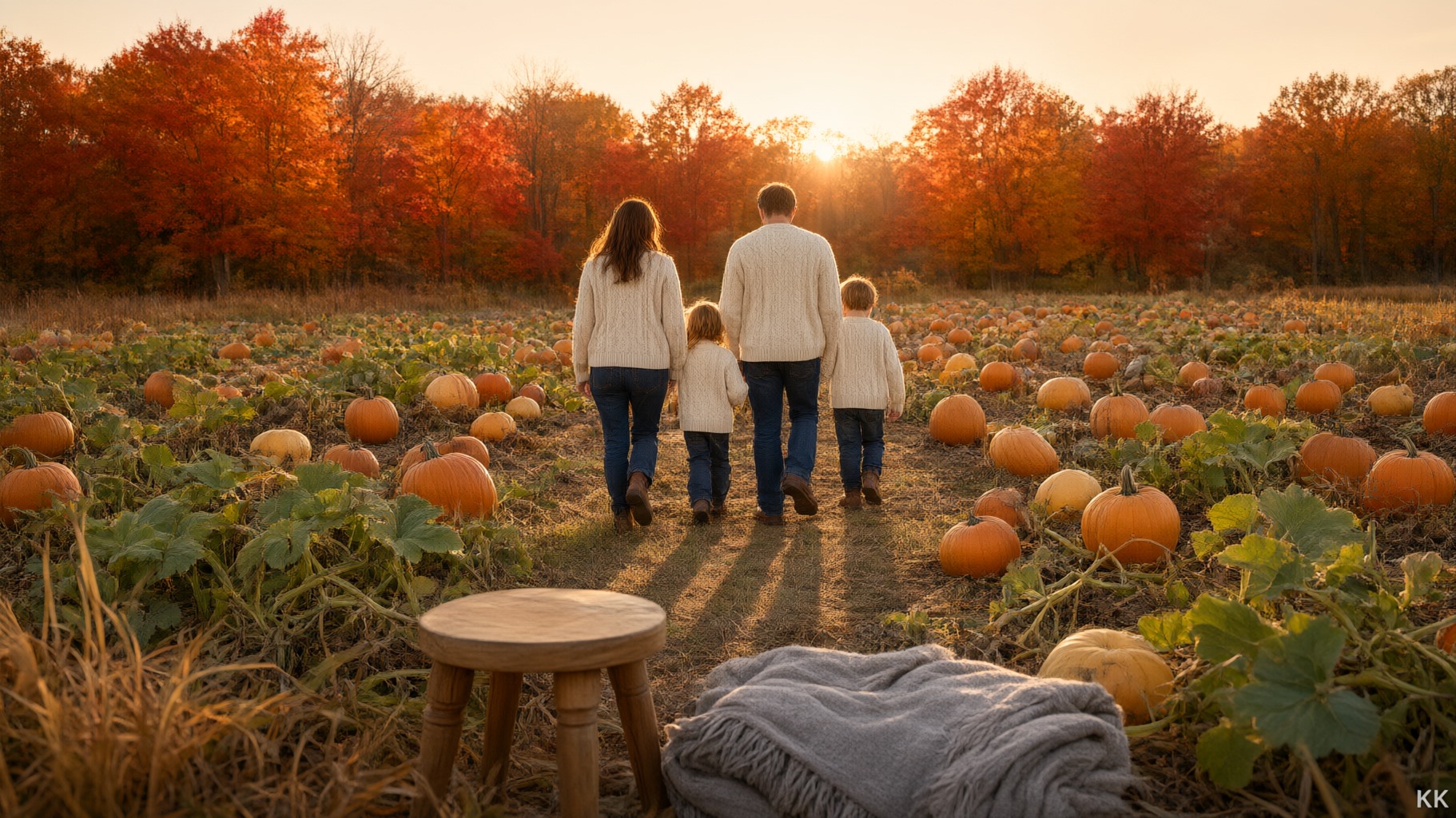
On 2 April, Sam’s Club recalled about 18,000 Valentine’s-themed children’s pajama sets. They had sold for around $14, and the notice gives one reason: they violated the federal flammability standard for children’s sleepwear (CPSC).
Nothing about the print was the problem; the same cloth cut for an adult would very likely have been legal, because a smooth-faced cotton at 2.6 ounces per square yard or heavier is exempt from adult flammability testing. That is the whole difficulty of family matching apparel manufacturing: one design, but the child’s half is a different product under US law, so fabric, fit and labels are chosen for the strictest member of the family.
Why a family matching apparel brand gets the reorder every year
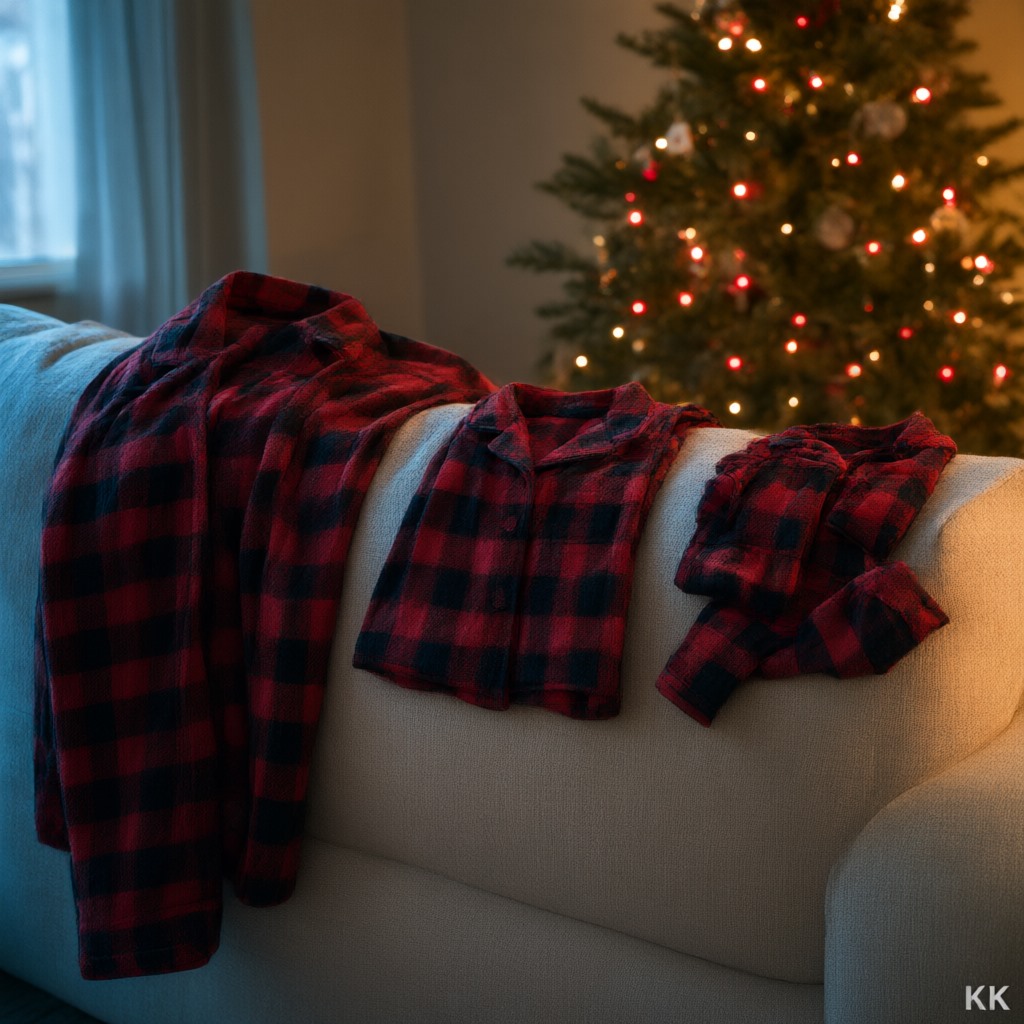
Kidswear has a repeat engine no adult category has. The pajamas that fit on Christmas Eve 2026 will not fit on Christmas Eve 2027, so the family buys again — and re-buys the adult pieces to keep the set complete. The occasions are fixed: search interest for “matching family pajamas” spikes every December (Google Trends), and Old Navy, Target and Hanna Andersson all run a family-matching category into the holidays (Today). They own the $14 end; a small brand wins on print, fabric and fit.
The concession: the US recorded 3,606,400 births in 2025, down 1% (CDC), and Circana expected kids’ apparel dollar sales to fall 1–2% this quarter (Retail Dive). The niche grows per household, not per child. Buy to take share, not to ride a tide.
“Kidswear is the only apparel category where the customer is guaranteed to need a new size next year.”
Children’s clothing safety rules: the kids’ half is a different product
US law calls anything intended primarily for children of 12 or younger a children’s product (CPSC). Every kids’ piece in your set is one. Every snap, zipper, button and screen-print ink is lead-tested at a CPSC-accepted lab — 100 parts per million for components, 90 for inks (CPSC clothing guidance). Those reports back a Children’s Product Certificate, filed at the border since 8 July (we covered the rule), and a permanent tracking label on garment and packaging.
Sleepwear is the rule that catches matching-set brands. Above size 9 months and up to 14, sleepwear must either pass a vertical flame test or be tight-fitting: inside the rule’s maximum body measurements, tapered, with the yellow “not flame resistant” hangtag. Infant sizes of 9 months and under are exempt if a one-piece is no longer than 25¾ inches (CPSC fact sheet, 16 CFR 1615/1616).
Custom kidswear manufacturing: one fabric, six size tables
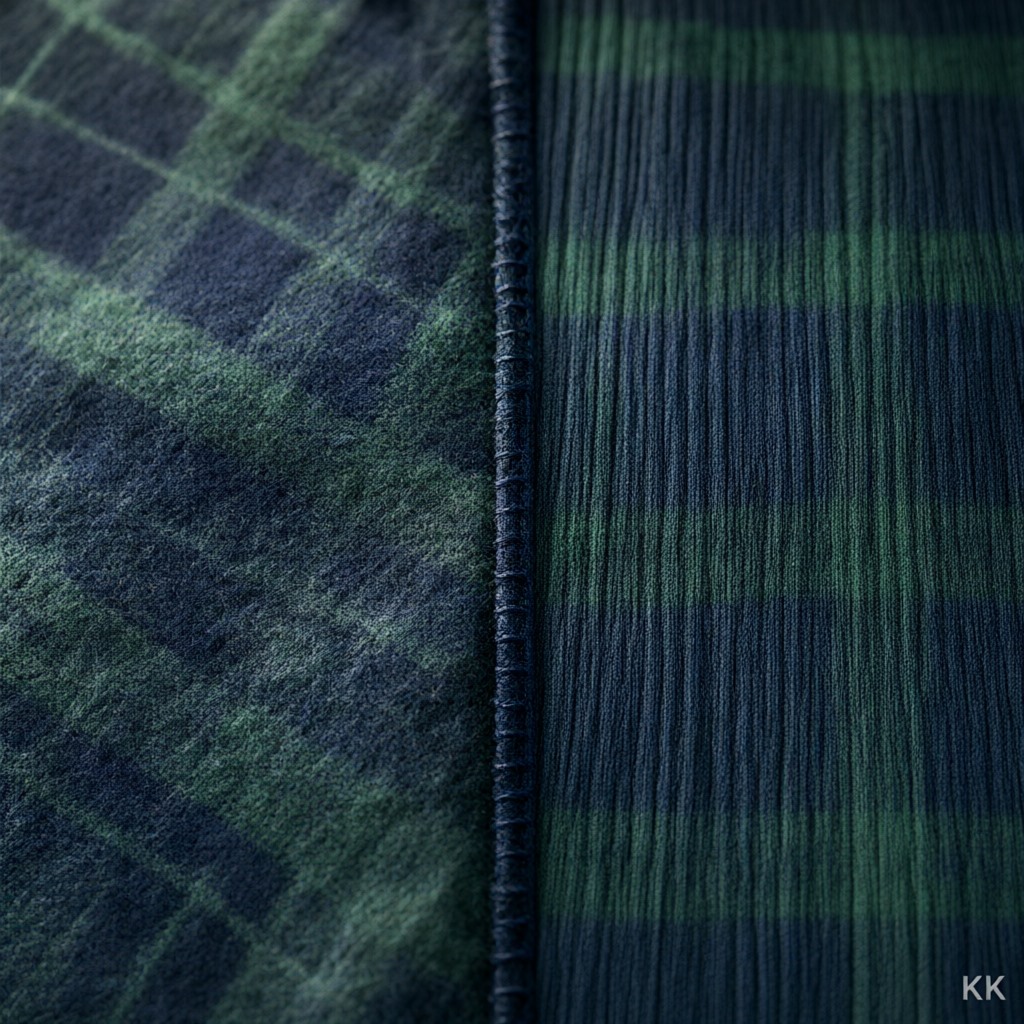
Choose the fabric for the strictest wearer. Cotton will not pass the flame test without a chemical finish, so a cotton kids’ pajama is cut snug and tagged; polyester knits usually can be made to pass. A brushed flannel is a raised-surface fabric, so the adult piece loses the 2.6-ounce exemption and needs the general test too.
Fit catches founders from adult apparel. ASTM publishes separate body-measurement tables for infants, little kids, girls, boys, misses and men (ASTM D13.55) — six tables, six blocks (the base pattern every size is graded from). A child has a larger head, no waist, and diaper room in toddler sizes. Draft the kids’ piece first: the tight-fitting measurements are ceilings, so the oversized adult silhouette cannot be mirrored down. Match the print, let the silhouette differ, and write both blocks into the tech pack.
Free download
The Family-Set Compliance Checklist
One page: which rule attaches to which piece by size, the exact hangtag and tracking-label wording, and the lab tests to order per component. PDF.
Matching family outfits in the USA: four dates and the calendar behind them
Demand arrives in bursts — holiday pajamas from early November to about 20 December, the fall photo session in September and October, reunions and the Fourth in matching tees, Easter in spring. A first cut-and-sew run takes about 23 weeks by sea, a reorder about 12, decorated stock blanks six to eight (the 23 weeks; the blanks route). Commit on 16 September and a new set lands on 24 February 2027.
| Occasion | Sells | Stock needed by | Commit a first run by (23 weeks) | Still open from 16 Sept 2026? |
|---|---|---|---|---|
| Holiday pajamas 2026 | Early Nov – 20 Dec | 1 November 2026 | Late May 2026 — passed | Decorated blanks only (lands 11 Nov) |
| Easter / spring photos 2027 | March – early April | 1 March 2027 | Late September 2026 | Yes — this fortnight, one style |
| Reunion / Fourth tees 2027 | June – August | 1 June 2027 | Late December 2026 | Yes — or decorate blanks in April |
| Fall photo outfits 2027 | September – October | 15 August 2027 | Early March 2027 | Yes — the sensible first cut-and-sew target |
| Holiday pajamas 2027 | Early Nov – 20 Dec | 1 November 2027 | Late May 2027 | Yes — the big one |
So this December is matching tees and sweatshirts on blanks, and film transfer is the method at those quantities. The cut-and-sew line is a 2027 project, aimed first at the fall photo season. Design it to carry over: a plaid with no year on it sells next December at full price; a “Christmas 2026” chest print is a markdown on the 26th.
Kids clothing production: what changes on the factory floor
Testing becomes a line item per style. Trims change: nickel-free snaps, no functional drawstrings, and for anything sized for a baby, fabric and trims certified to OEKO-TEX Standard 100 Class I, the strictest class, for children up to 36 months (OEKO-TEX). On the floor, a kidswear line keeps a broken-needle log, passes every carton through a metal detector and trims every thread end, because a loose loop inside a sleeve can wrap a small finger.
Then the number founders resist. A size-4 pajama uses perhaps a third of the fabric of an adult XL and almost the same sewing minutes. Price it at half the adult’s because it looks half the size, and the half of the set that drives the order is the half that loses money (where the minutes sit).
Family photo outfit sets without tripling your SKU count
Women XS–XL, men XS–XL, kids 2T to 14 in ten steps, baby in six: 26 SKUs per print, 78 for three prints, each with a size curve (how many of each size you buy) you are guessing at. The disciplined run is 17.
| Per print | The naive run | The disciplined run |
|---|---|---|
| Women | XS–XL · 5 | XS–XL · 5 |
| Men | XS–XL · 5 | S–XL · 4 |
| Kids | 2T–14 in ten steps, boys and girls blocks · 10 | One unisex block: 2T, 4, 6, 8, 10, 12 · 6 |
| Baby | 0–3 to 24 months · 6 | One snug romper, 3–6 and 6–9 months (infant-exempt) · 2 |
| SKUs per print | 26 | 17 |
| Prints | 3 → 78 SKUs | 2 → 34 SKUs |
One fabric across the whole family, so there is one strike-off (the printed test swatch you approve), one dye lot and one lab report. One unisex kids’ block; nobody has ever returned a 6 because it was not a “boys’ 6”. Baby as a single snug romper in the two infant-exempt sizes.
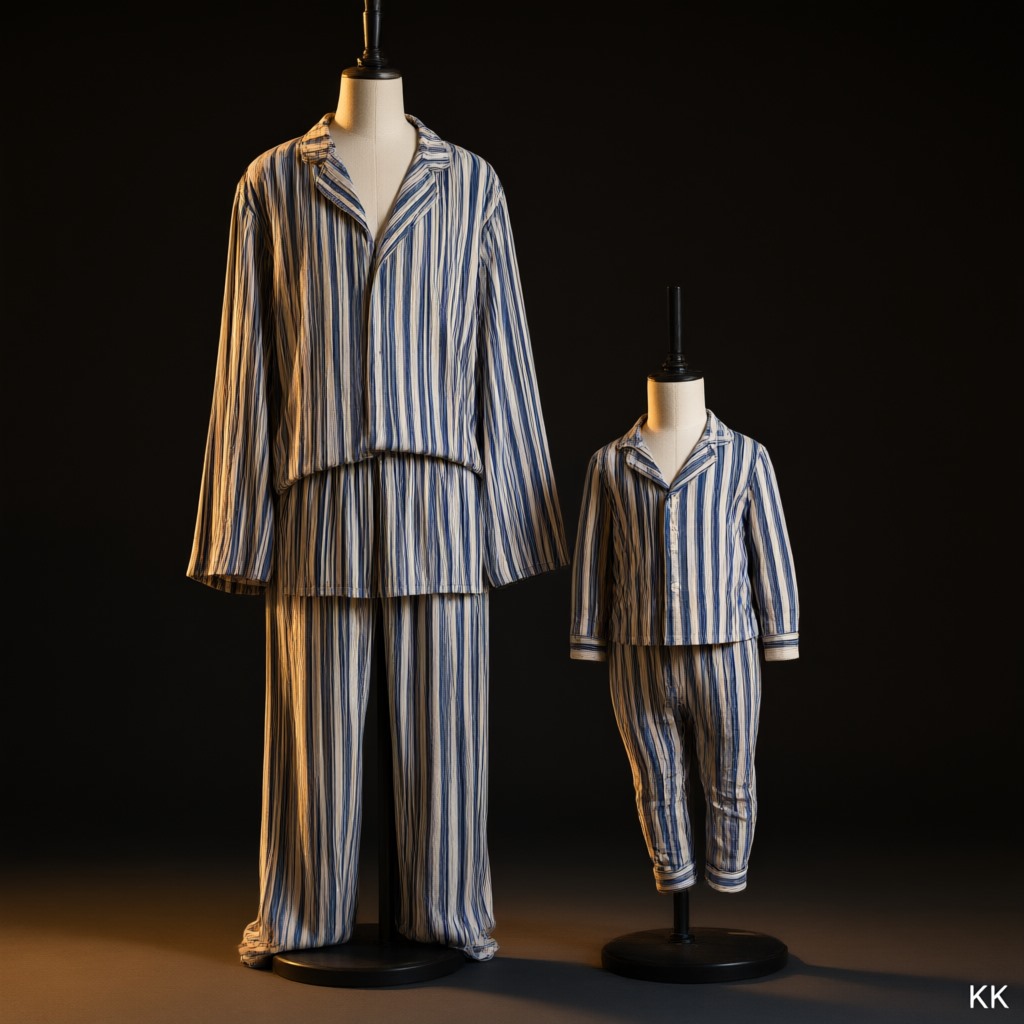
In your shoes we would build the child’s pajama first — snug cotton-spandex, one print, six sizes — prove it through the lab once, then draw the adult piece to match. Which print would you bet a dye lot on?
FAQs
What safety rules apply to the kids' pieces in a family matching set?
Every piece sized for a child of 12 or under is a children's product under US law, whatever the adult pieces are. That means accessible components such as snaps, zippers and buttons are tested for lead at a CPSC-accepted laboratory (the limit is 100 parts per million; 90 for paints and screen-print inks), the garment carries a permanent tracking label naming the maker, where and when it was made and a batch code, and you issue a Children's Product Certificate that is filed electronically at the border. If the piece is pajamas, a nightgown, a robe or loungewear in a size above 9 months, it must also either pass the children's sleepwear flame test or be cut tight-fitting to the dimensions in the regulation and carry the yellow hangtag. Hood and neck drawstrings are out on children's outerwear from 2T to 12.
Do matching family pajamas have to be flame resistant?
The children's pieces do, or they have to be tight-fitting instead. Above size 9 months and up to size 14, children's sleepwear either passes a vertical flame test on the fabric, the seams and the finished garments, or it is cut snug to the maximum chest, waist, seat, arm, thigh, wrist and ankle measurements in the rule, with tapered sleeves and legs and no trim standing more than a quarter inch off the garment. Most cotton sets take the snug route because cotton will not pass the flame test without a chemical finish; polyester knits usually can. The adult pieces are not covered by the sleepwear rule at all. They fall under the general clothing flammability standard, which most plain fabrics of 2.6 ounces per square yard or heavier are exempt from, though a brushed flannel is a raised-surface fabric and does need the test.
Is family matching apparel actually a growing market?
Growing per household, not because there are more children. US births fell 1% in 2025 to about 3.6 million, and Circana expected kids' apparel dollar sales to fall 1% to 2% in the third quarter of 2026. What is growing is the number of occasions a family dresses alike for: Christmas pajamas, the fall family-photo session, Easter, the Fourth of July, reunions, trips. And kidswear has a repeat engine no adult category has: the child needs a new size every year, and the family re-buys the adult pieces to keep the set complete. Plan to take share on print, fabric and fit, not to ride a demographic tide.
How many sizes does a family matching set need?
Fewer than you think if you decide it early. A naive run — women XS to XL, men XS to XL, kids 2T to 14 in ten steps, baby in six — is 26 SKUs per print, and three prints is 78. A disciplined run holds one fabric across the family, one unisex kids' block in six sizes (2T, 4, 6, 8, 10, 12), baby as a single snug romper in the two sizes the infant exemption covers, women in five sizes and men in four: 17 per print, 34 for two. Sizes come from six different ASTM body-measurement tables, so the kids' block is drafted, not scaled down from the adult.
When should a brand order family matching sets for the holidays?
A first cut-and-sew run takes about 23 weeks, a reorder of an existing style about 12, and decorated stock blanks six to eight. Commit on 16 September 2026 and a new set lands on 24 February 2027, after the season; a reorder lands 9 December, which is too late to reach customers before Christmas Eve by ground; decorated blanks land 11 November, which is why matching tees and sweatshirts printed on blanks are the only family product still open for this December. For cut-and-sew, the honest targets are the fall photo season of 2027 (stock by mid-August, so commit by early March) and holiday 2027 (stock by 1 November, so commit by late May).
About Krazy Kreators
Krazy Kreators is the end-to-end brand-building partner for US clothing founders — design, sampling, fabric sourcing and retail-grade production, and packaging, under one roof, from first sketch to shelf. krazykreators.com
Read next
11 min read
From Sketch to Store: A Real Clothing Production Timeline
The 23 weeks behind every date in this post, drawn week by week.
5 min read
Holiday 2026 Custom Apparel Playbook
The decorated-blanks route that is still open for this December.
12 min read
What Is a Tech Pack? The File Your Factory Builds From
Where the snug-fit dimensions and the two blocks get written down.
Comments
No comments yet
Be the first to share your thoughts!