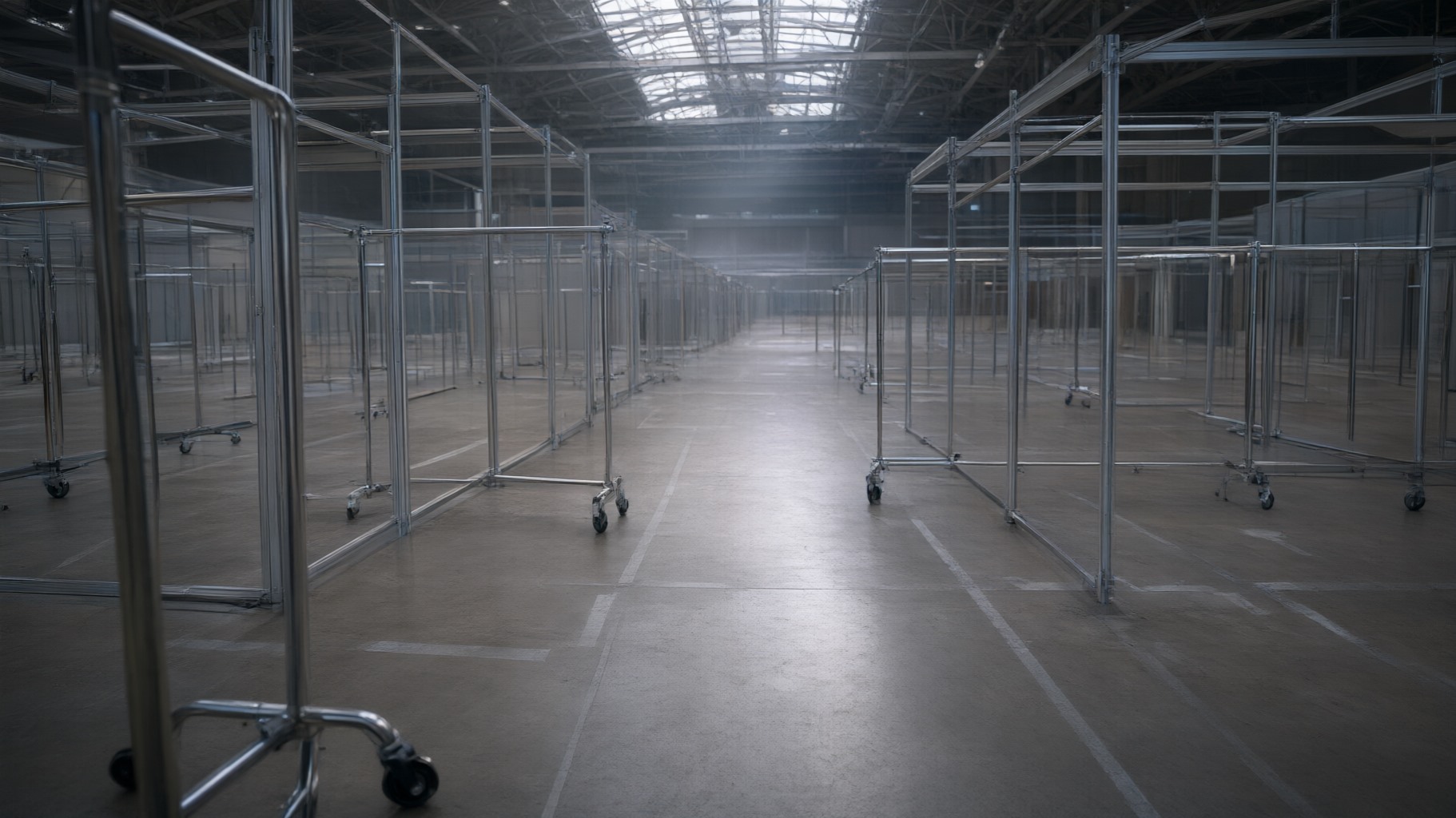
Coterie packed up in New York on 11 September. Next up: Atlanta Apparel, 2–5 February 2027 (Atlanta Apparel), then MAGIC and PROJECT in Las Vegas from 16 February (MAGIC). That is 21 weeks to Vegas, 19 to Atlanta.
A small collection, first sample to goods in your warehouse, takes about 23 weeks on a realistic timeline. Start from a blank sketchbook and February has gone. Already selling direct, with patterns on file? Then it is on — as a factory job, not a marketing one.
That is the point. Preparing for apparel trade shows mostly happens in October, at the factory. The booth just shows what you did there.
What wholesale buyers expect: consistency, MOQ and lead times
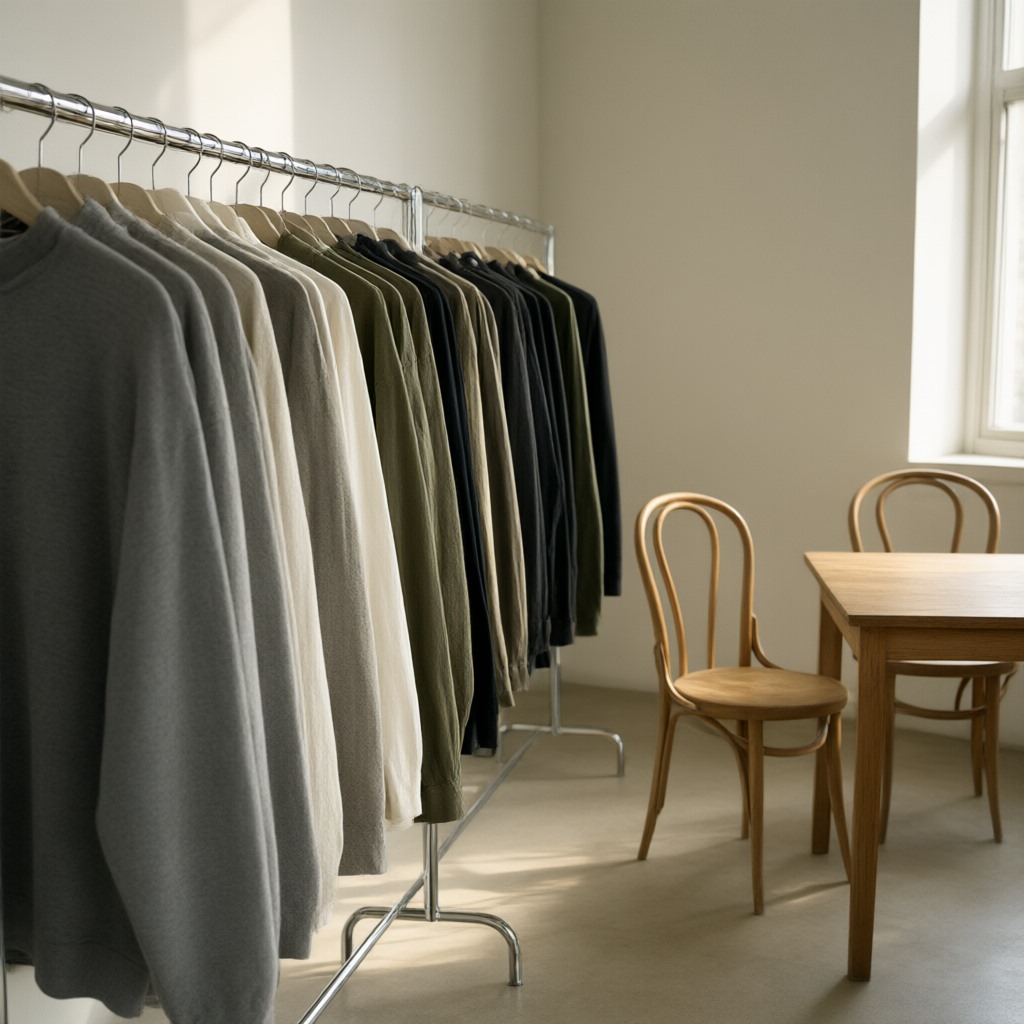
Buyers give you far less time than they used to. JOOR’s own order data shows the average gap between a wholesale order and the goods shipping fell from 253 days in 2019 to 86 in 2024 (JOOR). Buyers used to write nine months out, which effectively paid for your production. Now they write three months out, and a February order is expected on the floor by mid-May.
The buyer has changed too. Independent boutiques now make up 62% of transactions on JOOR, up from 49% five years ago (JOOR’s 2026 Wholesale Landscape, via Sourcing Journal). They open small: a few units per size, two or three colours. Easy on your risk, hard on your minimums. If your factory will not cut under 300 pieces a colourway, you need several stores to say yes before you can produce for one. See what unit cost does at each MOQ tier before you quote anyone.
And they are not buying the sample they touched. They are buying the 200th unit off the line, and it has to measure the same, which is what a tech pack is for.
Signs you are not ready to take the order
- • You cannot name a ship date without phoning your factory first
- • Your minimum per colourway is bigger than three stores combined would order
- • Your best sample was made by someone who will not be sewing the bulk
Building a line sheet for buyers and a sample set that reads as retail-ready
A line sheet is the order form (one block per style, the sheet buyers actually order from): product image, style number, colours, size run, fabric and weight, wholesale price, suggested retail, minimum, delivery window. The lookbook is for mood. The line sheet gets signed.
Two details make it look like it came from a real brand: a date in the delivery window (“ships 1–15 May”, not “Spring”), and the suggested retail printed next to wholesale, so the buyer is not doing your margin sums in front of you.
Samples must be sewn from bulk fabric at a quality you can repeat. A sample finished better than the run you will ship is a promise you cannot keep.
“The collection gets you the appointment. The lead time gets you the order.”
Production capacity planning before you commit to wholesale orders
If your patterns exist and fits are signed off, your real runway is the production and freight leg, roughly twelve of those 23 weeks. That fits inside the 21 you have. Just.
Just, because three jobs land on the same line: show samples, your normal restocks, and the February order that then has to ship by May. Brands find this out in March.
So book the capacity before the booth. In October, tell your manufacturer what February might bring, in units and weeks, and get a window held in writing. If they cannot, that is the expensive version of picking the wrong manufacturer. If minimums are the problem rather than the calendar, the fix is usually a different production model: see private label against fully custom and what a “no MOQ” promise really costs.
Free download
The Pre-Show Production Checklist
One page, counted back from 16 February 2027: when to lock the range, when to book factory capacity, when samples must be sewn, when the line sheet has to be finished, and the last date an order taken on the floor can still ship on time. PDF.
Would rather talk it through than read it? and we will tell you what is buildable in the time left.
Wholesale margin vs your DTC pricing: the two-number problem
Stores roughly double what they pay to reach the tag price. That one habit is what trips up brands that grew up selling direct.
Take a cotton tee at $14 FOB (the price at the port, before freight). Duty at the 26.5% all-in rate on most Asian origins (our 2026 tariff breakdown) adds $3.71, and a dollar of freight lands it at $18.70. Sell it wholesale at $28 and the store puts it out at $56. Your own site still sells it at $38.
That hands a retailer a product their customer can buy $18 cheaper by searching your name. Three ways out: raise your direct price, give wholesale its own styles, or take the thinner margin and treat the store as paid distribution. Just decide it before month four.
“If your own site undercuts the store that stocks you, you have not expanded. You have competed.”
Why buyers pass on collections they actually like
Rarely taste. Three things do the damage, and all three start at the factory.
Fit. Shoppers returned $849.9 billion of merchandise in 2025, 15.8% of US retail sales (NRF and Happy Returns). The buyer carries that cost. If your size 12 fits like a 10 because the grading was eyeballed rather than drafted from the base pattern, they mark down what fails and do not reorder.
Packaging. Goods without polybags, hangtags or scannable barcodes cost the store labour it did not budget. Nobody says so at the booth. They just pick the brand whose cartons open straight onto the floor.
Timelines. Stores buy to a floor-set date. Miss it and the order is not late, it is cancelled.
Sometimes it is not about you: they bought tees last week. Send the line sheet again in June. And wholesale is not always the right move. A brand with strong direct margin can deliver a perfect order and make less than before. Retail expansion for fashion startups buys reach, not margin.
Signs you will get passed over
- • Your size run was graded by scaling one pattern up and down by eye
- • Nobody has priced the polybag, hangtag and barcode into the unit cost
- • Your delivery window is a season, not a date you would put in writing
A pre-trade-show production checklist, counted back from February
Counted back from 16 February. Two weeks earlier for Atlanta.
- Now — late September. Lock the range. Cut anything you could not make again in twelve weeks.
- October. Book factory capacity for February in writing: units and weeks. Confirm minimums.
- October. Finish tech packs and graded specs for every style on the rail.
- November. Sew show samples at production quality, from bulk fabric.
- December. Build the line sheet: landed cost, wholesale, suggested retail, minimums, a dated delivery window.
- January. Check your site against the retail your wholesale implies. Close the gap.
- February. Walk in able to answer: when can you ship, and can you do it again in ninety days?
Every line there is a factory decision made months before anyone sees the rail. Trade show ready apparel manufacturing is decided in October and only revealed in February.
Krazy Kreators works this calendar with founders every season: samples from bulk fabric, graded specs, capacity held early. If you are aiming at a February room, the question is not whether the collection is ready. It is whether your factory could take the order twice. Which are you less sure about?
FAQs
When should I start preparing for apparel trade shows?
Count back from the show. Atlanta Apparel runs 2–5 February 2027 and MAGIC opens in Las Vegas on 16 February, about 21 weeks from late September. A small collection built from scratch takes around 23 weeks, so it will not make it. If you already sell direct and your patterns and tech packs exist, the production and freight leg is roughly 12 weeks and February is realistic. Book the factory capacity before you book the booth.
What do wholesale buyers expect from a clothing brand?
Three things: consistency, a delivery date, and a price that leaves them margin. Consistency means unit 200 measures the same as the sample they touched. A delivery date means a window with a real date in it, not a season. Margin means a wholesale price a store can roughly double and still sell.
What goes on a line sheet for buyers?
One block per style: a clean product image, a style number that never changes, colours, size run, fabric and weight, wholesale price, suggested retail price, the minimum per style or colour, and a delivery window with a date. Printing the suggested retail saves the buyer doing your margin sums in front of you.
How much lead time do wholesale buyers give you now?
Much less than they used to. JOOR’s order data shows the average time from a wholesale order being placed to the goods shipping fell from 253 days in 2019 to 86 days in 2024. An order written at a February show is expected on the shop floor around mid-May, so factory capacity, not design, decides whether you can take it.
How do I price for wholesale without breaking my DTC pricing?
Work up from landed cost, then check the retail price it implies against what your own site charges. Stores roughly double wholesale, so a tee landing at $18.70 and sold wholesale at $28 implies $56 on the shelf. If your site sells it at $38, you are undercutting the store by $18. Raise the direct price or give wholesale its own styles.
Why do buyers pass on collections they like?
Usually fit, timelines or packaging rather than taste. Uneven grading means the store marks down the sizes that fit wrong and does not reorder. A missed delivery window is a cancelled order, because stores buy to a floor-set date. Goods without polybags, hangtags and barcodes cost the buyer labour they did not budget. And sometimes they simply bought the category last week. Follow up anyway.
About Krazy Kreators
Krazy Kreators is the end-to-end brand-building partner for US clothing founders — design, sampling, fabric sourcing and retail-grade production, and packaging, under one roof, from first sketch to shelf. krazykreators.com
Read next
10 min read
Custom Clothing Manufacturing Cost at Every MOQ Tier
What your unit cost really does as the order size moves.
8 min read
What Is a Tech Pack? The File Your Factory Builds From
The document that makes unit 200 match the sample.
12 min read
How to Start a Clothing Brand in 2026
The groundwork underneath any retail expansion plan.
Comments
No comments yet
Be the first to share your thoughts!