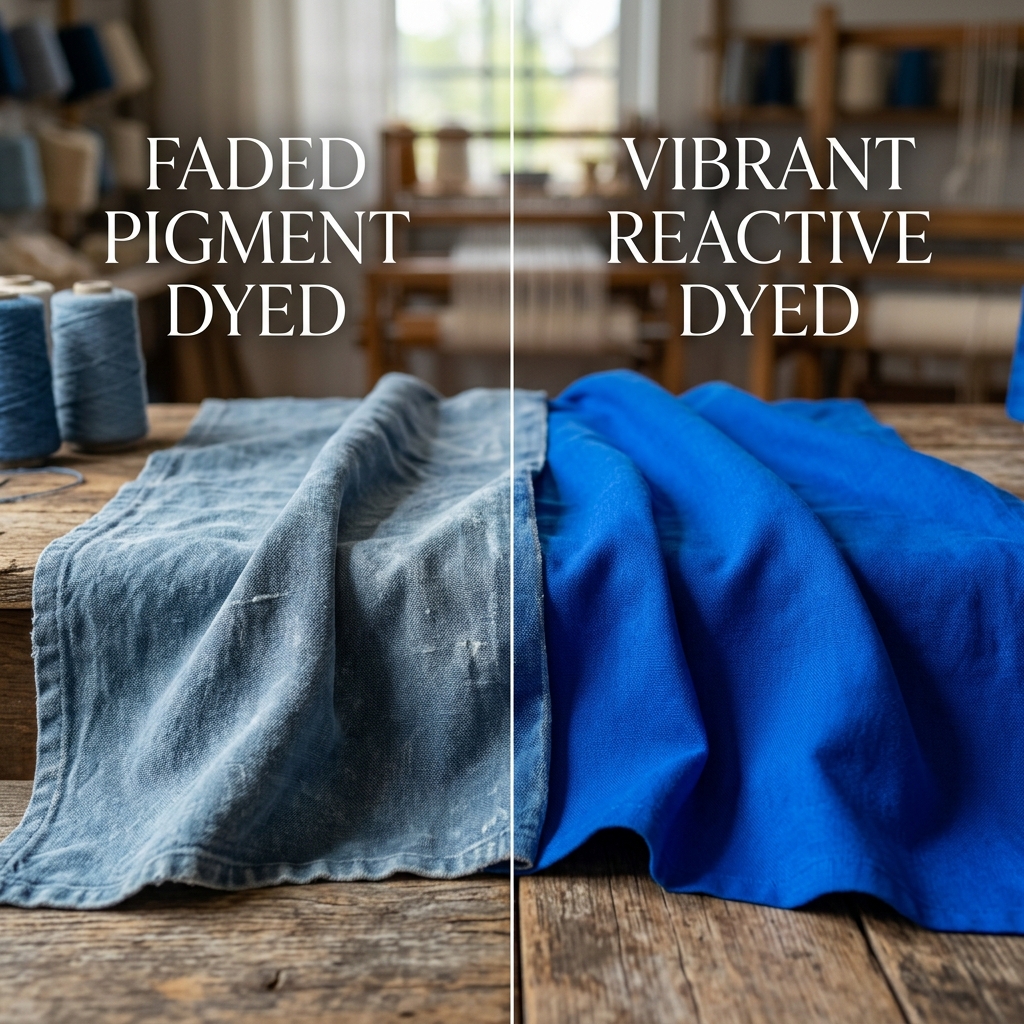
Pigment Dye vs. Reactive Dye: Which One Is Right for Your Brand?
That "vintage, washed-out feel" you keep asking for? It has a name. Here is everything you need to know about garment dyeing before your next production run.
Krazy Kreators Team
April 6, 2026
We hear it almost every week. A designer walks into a call and says, "I want that vintage, washed-out look." Great. We get it. But when we follow up with, "Are you thinking pigment dye or reactive dye?" there is usually a long pause. And honestly, that pause is totally normal. Most designers have never had anyone explain the difference clearly.
Here is why it matters: the dyeing technique you pick does not just change the color of your garment. It changes the hand feel. It changes how the color behaves after ten, twenty, fifty washes. It changes whether your customer thinks they bought something premium or something disposable. That is a lot riding on one production decision.
Whether you are building a heritage streetwear label or launching a clean, vibrant activewear line, this guide will help you understand what each dyeing process actually does, when to use it, and what to avoid so you do not waste time or money on the wrong finish.
What is Pigment Dyeing?
You know that effortlessly faded, slightly sun-bleached look you see on high-end streetwear hoodies and vintage-style tees? That is pigment dyeing. It is the technique behind almost every "lived-in" garment on the market right now.
The key difference with pigment dye is that it does not chemically bond to the fiber. Instead, the color sits on the surface of the fabric and is held in place by a resin binder. Because the dye is surface-level, it fades naturally over time, especially along seams, edges, and areas of friction. That is exactly what gives it the worn-in, broken-in character that so many brands try to replicate artificially.
The Vibe
- Hand feel: Soft, matte, slightly chalky to the touch
- Wash behavior: Fades gradually with each cycle, gets softer over time
- Uniqueness: No two pieces look exactly the same, slight color variation is built in
- Color fastness: Lower by design. The fading is the feature, not a defect
- Works best on: 100% cotton or high-cotton blends, especially heavyweight fleece
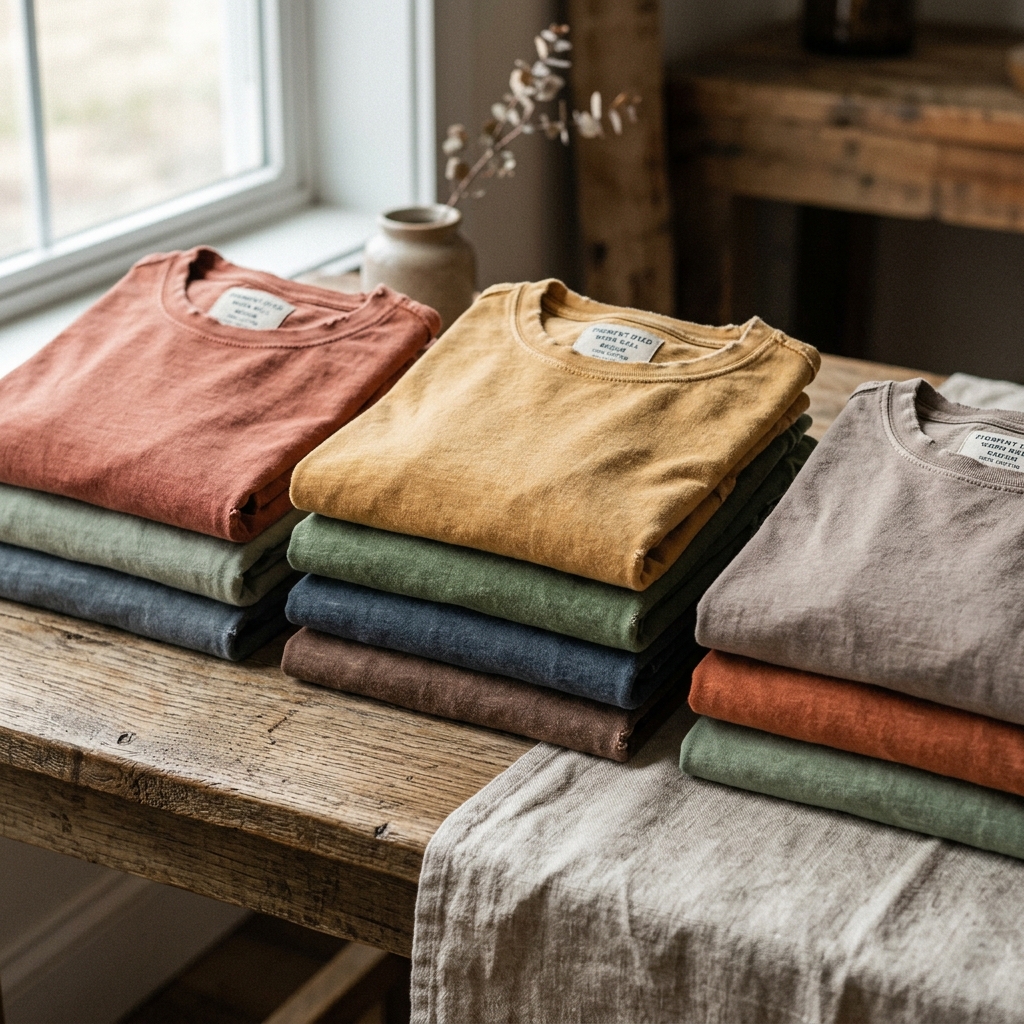
Pigment dyed garments with natural color variation, each piece slightly different from the next
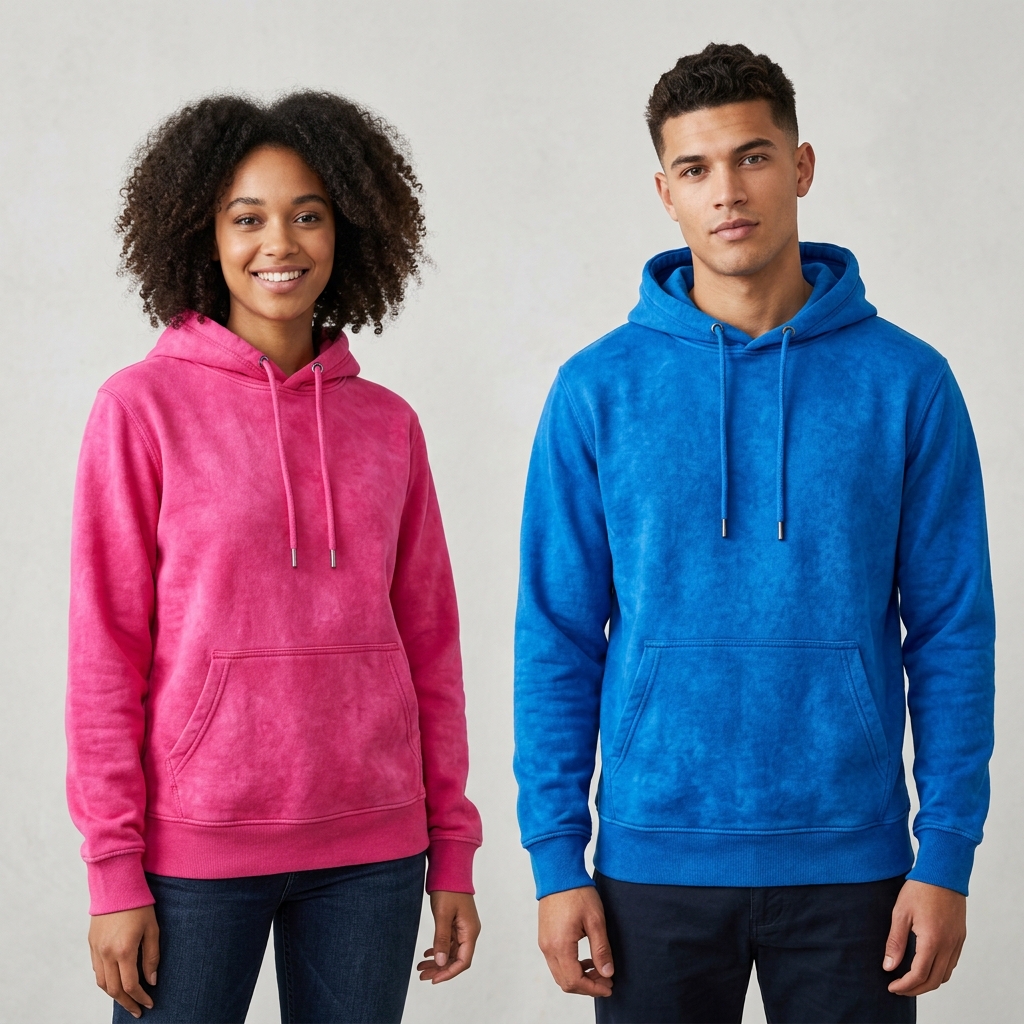
Reactive dyed fabric holds bold, saturated color wash after wash
What is Reactive Dyeing?
If pigment dye is the vintage cousin, reactive dye is the clean-cut professional. This is the industry standard for bold, saturated colors that need to look the same on the first wear as they do on the fiftieth wash.
The science behind it is straightforward. Reactive dye molecules form a covalent chemical bond with the cellulose fibers in the fabric. The color literally becomes part of the material rather than sitting on top. That is why it holds up so well over time and why most premium basics, activewear, and uniform brands rely on it for consistent color reproduction across hundreds or thousands of units.
The Vibe
- Hand feel: Smooth, clean, natural to the touch
- Wash behavior: Holds strong after 50+ washes with minimal shift
- Consistency: Highly uniform across production batches
- Color matching: Ideal for hitting exact Pantone references
- Works best on: Cotton, linen, viscose, and other cellulosic blends
Pigment Dye vs. Reactive Dye: A Quick Comparison
| Property | Pigment Dye | Reactive Dye |
|---|---|---|
| Color Bonding | Surface-level (resin binder) | Chemical bond with fiber |
| Hand Feel | Soft, chalky, dry | Smooth, clean, natural |
| Color Fastness | Low — fades over time | High — holds after 50+ washes |
| Color Vibrancy | Muted, earthy tones | Bright, saturated tones |
| Consistency | Each piece is slightly unique | Highly uniform across batches |
| Best For | Streetwear, vintage aesthetics, casual | Premium basics, activewear, uniforms |
| Water Usage | Lower | Higher (requires extensive rinsing) |
| Cost | Generally lower | Generally higher |
So Which One Should You Actually Use?
This is where most designers get stuck. The answer depends entirely on what you are making and who you are making it for. Here is a simple way to think about it.
Go With Pigment Dye If...
- You are building a streetwear or vintage-inspired collection where character matters
- You want each piece to feel slightly one-of-a-kind, like a thrift find
- Your palette leans toward earth tones, dusty pastels, or muted shades
- The fading is part of the story you are selling (think "gets better with age")
- You are working with 100% cotton or heavyweight fleece blanks
- You want the garment to feel pre-worn and broken-in straight out of the packaging
Go With Reactive Dye If...
- Color accuracy is non-negotiable and you need to hit an exact Pantone reference
- You are producing hundreds or thousands of units that all need to match
- Your product will be washed heavily (activewear, essentials, kids' clothing)
- Your designs call for bright, saturated, or deep colors that pop
- The garment will also get screen printing, embroidery, or other embellishment on top
- You are selling to retail or wholesale accounts with strict QC standards
Mistakes We See Designers Make All the Time
This is not a judgment call. These are genuinely common pitfalls, and we see them on a weekly basis. The good news is they are all completely avoidable once you know what to watch for.
Wanting "vintage" but expecting the color to never change. This is the big one. Pigment dye fades by nature. That is the whole point. If you want the worn-in aesthetic without the actual color shift, the better move is reactive dye with a garment wash or enzyme treatment layered on top.
Applying pigment dye to polyester blends. Pigment dye does not grip synthetic fibers well. You end up with patchy, uneven coverage that looks like a production defect, not a design choice.
Skipping wash-down testing before bulk production. A color that looks perfect before washing can shift noticeably after just one cycle. Always request wash-test samples. This single step can save you an entire rejected bulk order.
Forgetting about rub fastness. Pigment dye can transfer onto lighter garments, car seats, or furniture. If your customers are going to notice, you need to test for crocking before you ship.
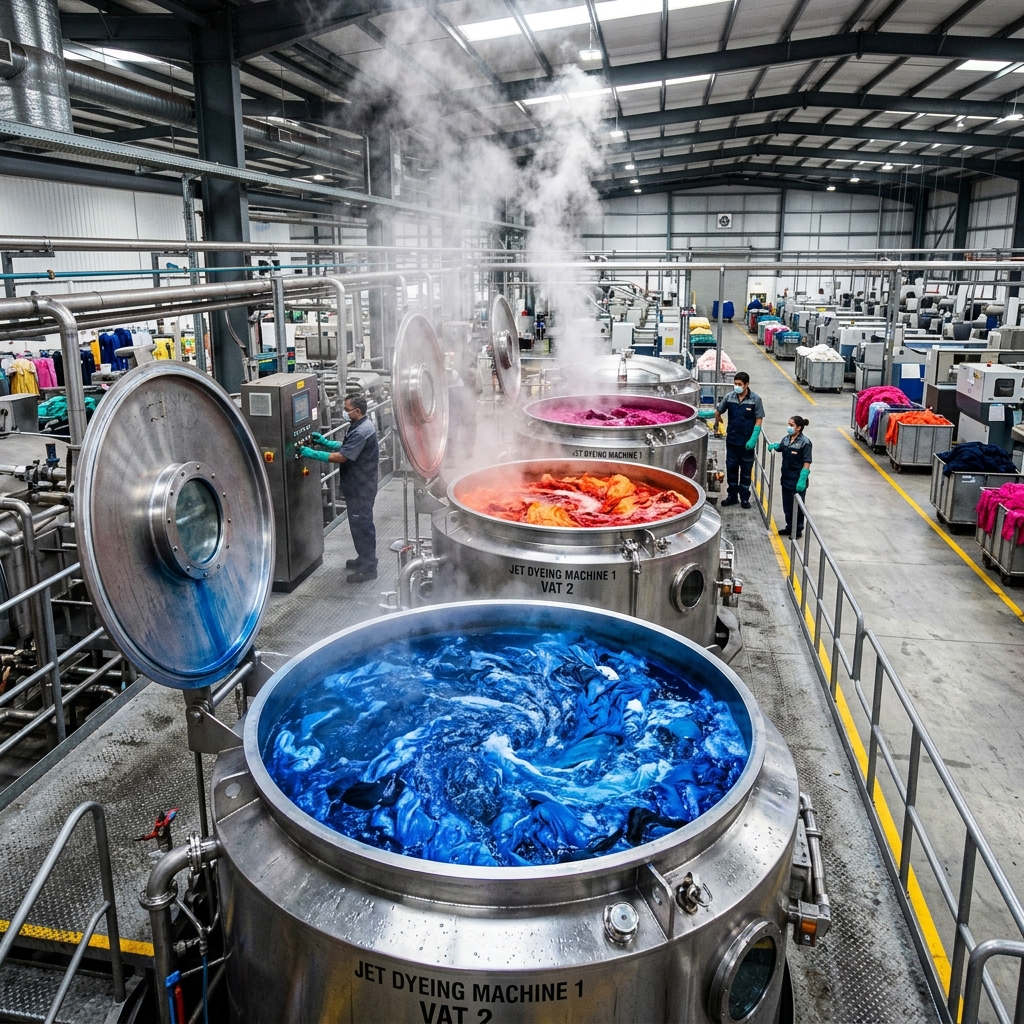
Knowing the process helps you give clearer briefs and avoid costly revisions
What We Tell Every Designer Before They Go to Bulk
Layer Your Finishes
Want that vintage look but cannot afford the color to shift too much? Dye reactive first, then apply a pigment wash or enzyme wash on top. You get the base color stability with the surface-level texture and softness. This is one of the most requested finishes at Krazy Kreators right now.
Always Get Lab Dips First
Never commit to bulk without seeing 2-3 lab dip options on your actual fabric. Colors behave differently on different weights and compositions. What looks perfect on a 180 GSM single jersey will look completely different on a 320 GSM fleece.
Specify Post-Dye Treatments Upfront
Silicone softeners, enzyme washes, and mechanical tumbles all interact differently with pigment and reactive dye. If you only specify the color and skip the finishing details, you might get the right shade with the wrong hand feel.
Put It All in the Tech Pack
Dye type, Pantone code, wash treatment, target hand feel, and fastness expectations should all live in your tech pack. The more specific you are on paper, the fewer revision rounds you burn through in production.
Stop Guessing. Start Specifying.
The gap between a garment that looks "fine" and one that looks genuinely premium often comes down to one thing: the dye process. And most designers never get to have this conversation with their manufacturer because they do not know what to ask for.
At Krazy Kreators, we handle the full spectrum of garment dyeing and finishing. Pigment washes, reactive dye color matching, enzyme treatments, silicone softeners, layered finishes. Whether you are going for a sun-faded LA streetwear aesthetic or you need Pantone-perfect color for a wholesale retail launch, we work with you to dial in the exact finish before anything goes to bulk.
You bring the vision. We bring the process.
Did this dyeing guide help you?
Discussion (0)
Leave a Reply
No comments yet. Have a question about dyeing? Ask below!