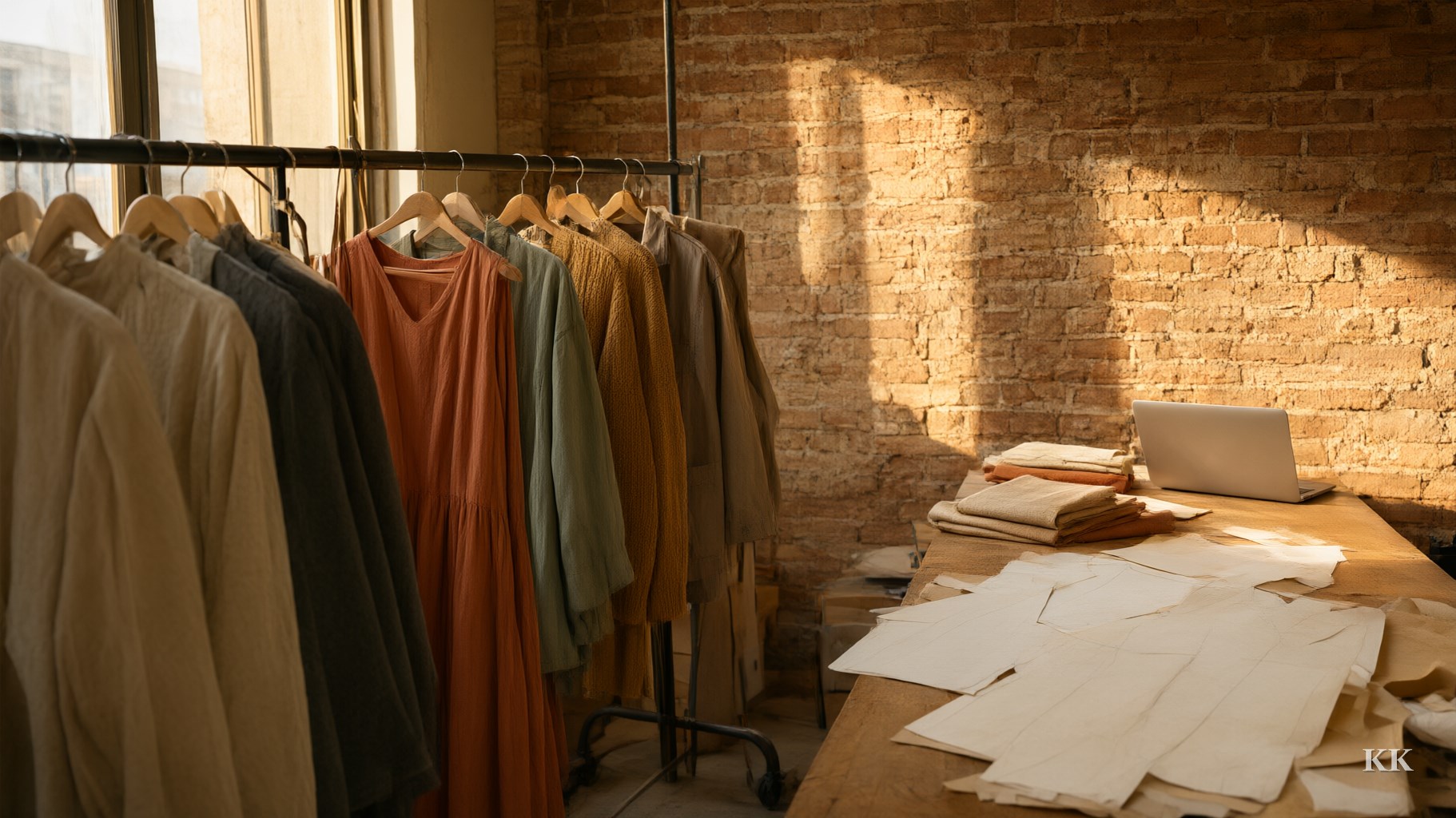
Most of the founders we work with already have taste. Across the 50+ brands we have helped launch, the ones who struggled rarely had a bad product. They had made one early decision, usually about the customer or the price, that nobody tested until the money was spent.
That isn’t unique to fashion. Of the US businesses that opened in March 2021, 47.2% were still operating five years later, according to the Bureau of Labor Statistics. Clothing brands close for ordinary reasons too, and the reasons are usually visible well before the first order ships.
These are the seven mistakes new fashion brand founders make most often, in roughly the order they make them. Each section shows how the mistake plays out in the garment, on the cost sheet or in the stockroom, and ends with warning signs you can check against your own plan. The “what actually happens” boxes are illustrations with round numbers, not accounts of specific clients; where we name a brand, the details come from its case study. Our earlier list of ten covers wider ground, including cash flow.
Made here, paid for later
Each line runs from the stage where the decision gets made to the stage where it starts to cost money. The longer the line, the longer it stays hidden.
Idea
Brand
Samples
Costing
Bulk
Launch
After
01Mistake 1 of 7
1. Starting Without Understanding Your Target Audience
Most briefs we receive start with a product, a heavyweight hoodie, say, or a resort shirt. The customer comes later and is often described as someone like the founder. Designing for your own taste is how most labels begin, and it can work, but you are one buyer and you already like the product.
In clothing, the customer decides things founders tend to treat as design choices. Their body sets the fit block (the base pattern every size is graded from) and the size range. Where they live sets the fabric weight.
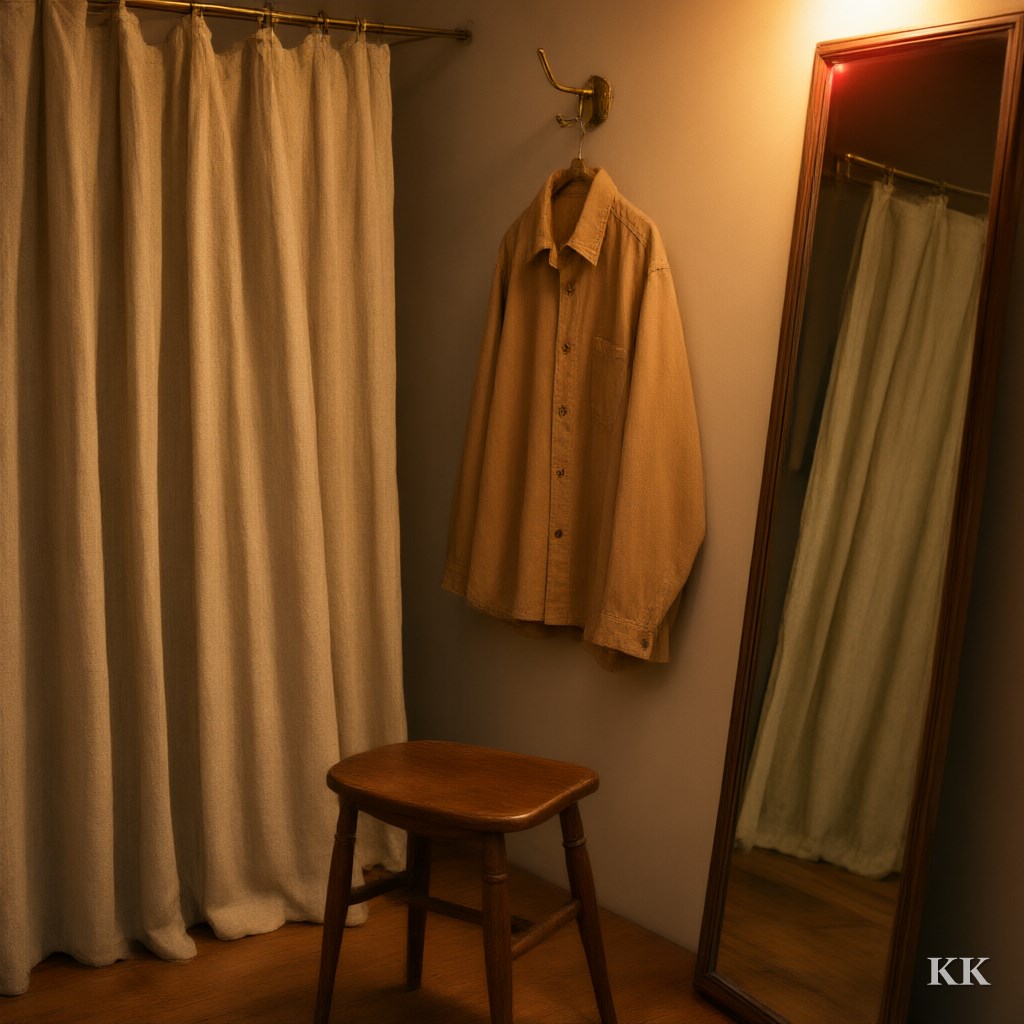
The founder of Las Loungewear did it the other way round. She knew who she was dressing: women who spend long hours traveling and want support without looking like they’re in gym clothes.
She didn’t yet know the fabrics or the silhouettes. Those came out of our research into travelwear in the US and Gulf markets, which had a direction because the customer was already clear.
How to avoid it: describe one customer in a sentence, including where they shop now and what they pay there. Look at what those brands charge for the piece you want to make, and fit your sample on someone who matches the description. Then test demand with a waitlist or pre-orders before you commit to a full run.
02Mistake 2 of 7
2. Ignoring Brand Identity and Positioning
Founders often give the logo weeks and the positioning an afternoon. Positioning is the harder question: why would someone buy your shirt instead of a similar one from five other labels? Without a clear answer the website and the Instagram grid start saying different things, and customers trust the brand less even when they can’t say why.
The answer also has to show up in the garment, because customers judge a brand with their hands. A claim of premium gets tested by the fabric weight, the trims (buttons, zips, labels and other attached components) and how the seams are finished on the inside.
Tilted Lotus began with a position before a product. Preeti Gore, its Houston-based founder, wanted South Asian art on contemporary silhouettes, made as slow fashion. Every later choice, up to the collection shown at New York Fashion Week, could be checked against that line.
How to avoid it: write a one-sentence positioning statement before you brief a designer. Then hold every touchpoint up against it, from the fabric and the woven label to the product photos.
03Mistake 3 of 7
3. Choosing the Wrong Manufacturing Partner
The usual story is a sample that’s right and a bulk order that isn’t. The fabric arrives lighter or a size runs small, and the invoice has already been paid. Sample quality that didn’t hold in bulk was a problem Drover, HY Official and Tilted Lotus all listed before they started working with us.
Part of the reason is that samples and bulk are made differently. A sample comes from a sample room’s most experienced machinists and a few yards of fabric. Bulk goes through a production line on a fabric lot nobody may have tested, which is why the sample that matters most is the pre-production sample (the final sample, made from the actual bulk fabric).
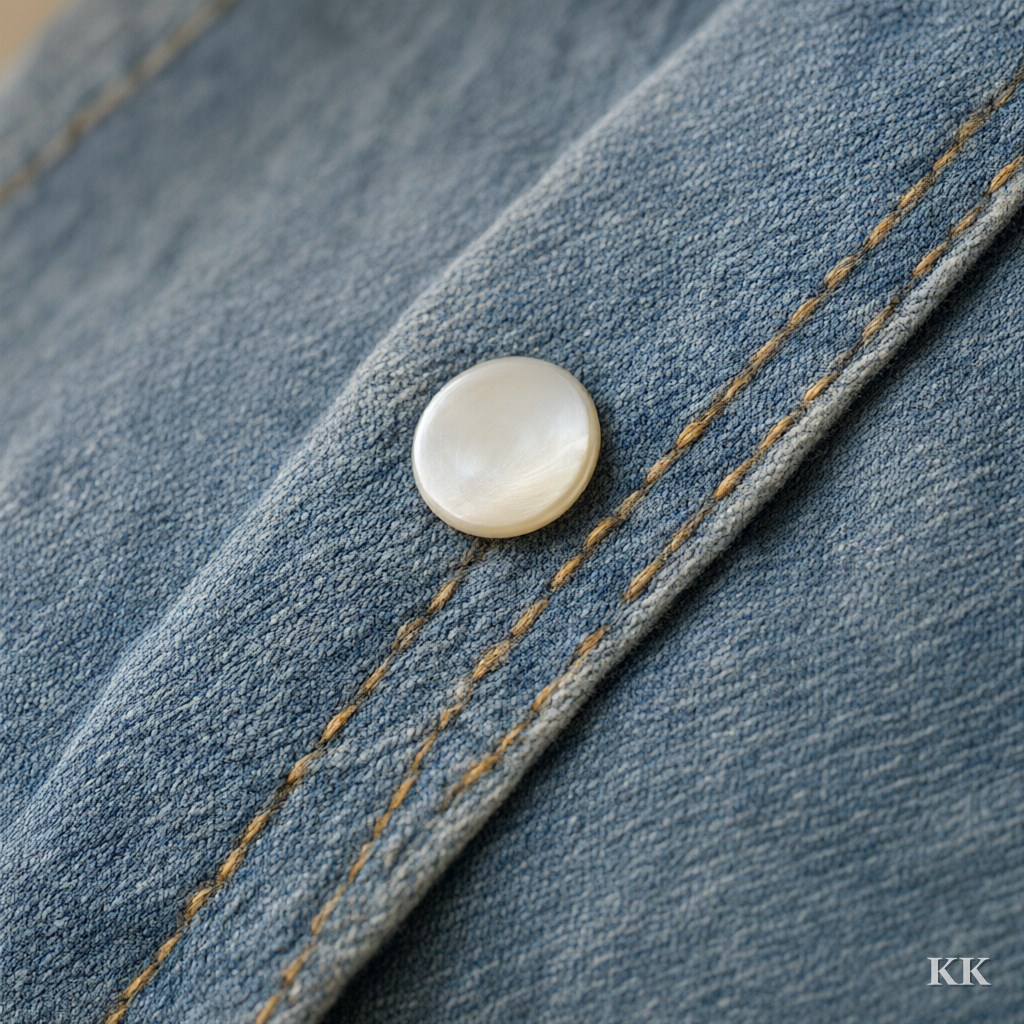
Drover makes western shirts that get worn hard, so we supervised the sample runs ourselves and approved the fit on different body types, moving as well as standing.
Trial shirts went out for wear tests before anything went to bulk.
Check the labels as well, because a factory abroad may not know US rules. The FTC requires fiber content, country of origin and the company’s name or RN (an FTC-issued identification number) on most clothing, plus a permanent care label. Cartons that arrive without them have to be relabeled before anything can be sold.
How to avoid it: ask who will sew the bulk and whether your sample comes from that same unit. Put fabric weight, measurements, tolerances (how far each measurement may vary) and a shrinkage limit in a tech pack, the spec document a factory builds from. Before cutting starts, approve a pre-production sample and ask for a wash test (AATCC TM150 is a common US method). Agree in writing what happens if bulk doesn’t match, because the cost of skipping that lands on you.
04Mistake 4 of 7
4. Getting Product Pricing Wrong
Most underpricing starts with the factory quote, which is only the first line of the cost. A garment made overseas also carries freight, US duty, customs fees, packaging, payment fees, returns and the cost of finding the customer. Read the quote itself closely too. A CMT price (cut, make and trim, labor only) leaves the fabric to you, while an FOB price (finished garment delivered to the port) includes it, so founders comparing two quotes are sometimes comparing different things.
Take a cotton tee made in India for $14. Since July 24, 2026 it pays the normal 16.5% duty plus a 10% Section 301 duty, so $3.71 goes to duty before you count freight or fees. Returns take another share: US retailers expected 19.3% of online sales to come back in 2025, against 15.8% across all sales (NRF).
One tee, before it reaches your door
Then there’s the channel. Stores usually price at about double what they pay you, a markup the trade calls keystone, so a retail price that only works direct-to-consumer leaves no room for wholesale later.
How to avoid it: build the price up from landed cost (everything it costs to get the garment to your door), then check it against what competitors charge. If the two numbers don’t meet, change the fabric or the product before you cut the margin. Leave room for end-of-season markdowns too, since part of most runs sells at a discount.
Checking your own plan as you read? The nine-point pre-launch checklist is near the end, and you can tick it off on the page.
05Mistake 5 of 7
5. Launching Without a Proper Marketing Strategy
A launch with nobody waiting for it usually means a slow first month, however good the clothes are, and the stock is already paid for.
Clothing adds a calendar problem. Stock has to land while customers are still buying for that season, and a first run takes around 23 weeks on our production timeline, so the marketing and the production have to be planned back from the same date.
Start talking while the collection is still in sampling. Fit sessions and fabric choices make honest Instagram content, and they give people a reason to join an email list before there is anything to buy. Shoot from the pre-production sample, so the photos and the lookbook are ready before the stock is. Badria Al Shihhi’s first collection opened with a fashion-show debut, alongside her online store and first physical shop, so the launch had a date people could plan around.
Creators and paid ads come after that. If you send free product to influencers, the FTC expects the connection to be disclosed in the post itself, and its guidance to companies is blunt: “Your company is ultimately responsible for what others do on your behalf.” Run small paid tests before launch, so the launch budget goes on the message that already works.
How to avoid it: write the marketing plan when you approve the first sample, not when the stock lands. Pick the one channel your customer actually uses and build there first.
06Mistake 6 of 7
6. Managing Inventory Without Demand Planning
Too much stock ties your cash up in boxes, and the usual way out is a discount, which teaches customers to wait for the next sale.
Too little is the nicer problem, but a style that sells out in a week can take months to come back. Our production timeline puts a reorder at about 12 weeks.
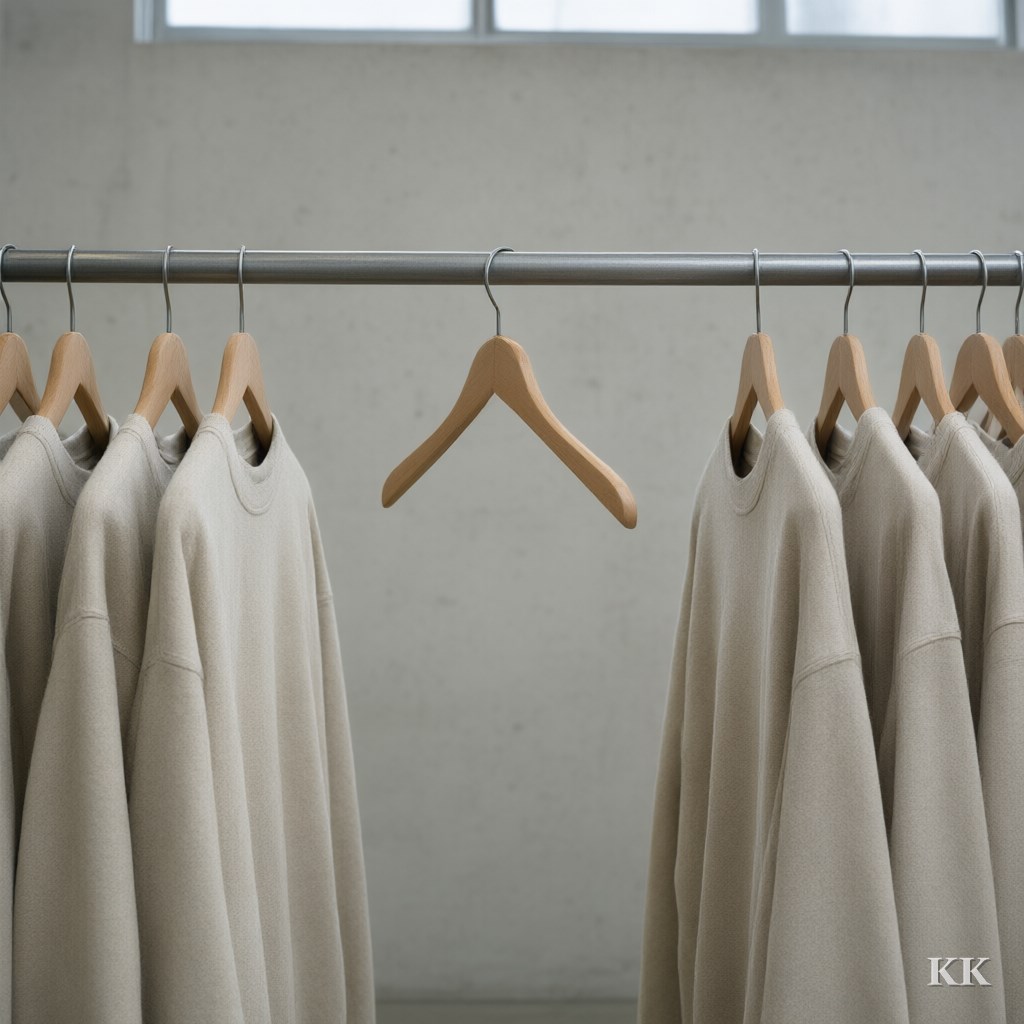
Clothing makes the forecast harder because a style isn’t one item. One shirt in three colors and five sizes is 15 separate items, and each can sell out or sit on its own. The split of units across sizes is called the size curve, and it should follow your customer, not an even spread.
Badria Al Shihhi planned for this from the start, with many styles and a small quantity of each.
“I want to give women something exclusive, beautiful, and accessible — not fast fashion, but fast elegance.”
Badria Al Shihhi, founder, on the brief for her first collection
Small batches cost more per piece. You are paying a little more on each garment so you don’t pay for the ones nobody buys.
How to avoid it: start with smaller runs and reorder what sells, weighting the size curve with whatever pre-order data you have. Keep a swatch from the first run so the mill has a shade to match. Track sell-through (the share of your stock sold in a set period) by style every week for the first two months, and plan bigger buys around the US retail calendar, holiday above all.
07Mistake 7 of 7
7. Treating the Launch as the Finish Line
Launch day gets most of the planning, and the weeks after it get almost none. Your first customers are the easiest people you will ever sell to again, and they are also your best source of product feedback.
Returns are the clearest version of that feedback. If one style keeps coming back for fit, the pattern needs work, and the next production run is where to fix it. On HY Official’s camp shirt we went through several sample rounds to get the fit and the drape right before bulk, and reviews and return reasons should feed the next run in the same way.
How to avoid it: plan the first 90 days after launch before you launch. That means a follow-up to first buyers that asks about fit, and a date by which you will decide on the reorder. Count repeat customers, not only first orders.
What We Learned From Launching 50+ Fashion Brands
Every launch is different, and some of the advice above bends. A founder who already has an audience, a stylist or a creator for example, can spend less on pre-launch marketing and order a little deeper, because demand is partly proven. A wholesale-first label plans stock to purchase orders rather than forecasts.
What stays the same is the order of decisions. Badria Al Shihhi came to fashion from chemical engineering and public leadership, and her brand launched eight months after we started.
“In our experience, the founders who struggle are more often the ones who chose a factory before they chose a customer.”
Krazy Kreators Team
After that it comes down to repeating quality. A customer who gets the same fit and fabric on their second order as on their first is likely to place a third.
A Practical Checklist Before Launching Your Fashion Brand
Tick these off before you place a bulk order. Each one links back to the section that covers it.
Pre-launch checklist
0 of 9 done
- Define your target audience
- Research your competitors
- Establish your brand identity
- Finalize your product range
- Validate manufacturing quality
- Calculate pricing and profit margins
- Prepare your marketing strategy
- Plan inventory and fulfillment
- Build a customer retention strategy
Final Thoughts: Build a Fashion Brand With the Right Foundation
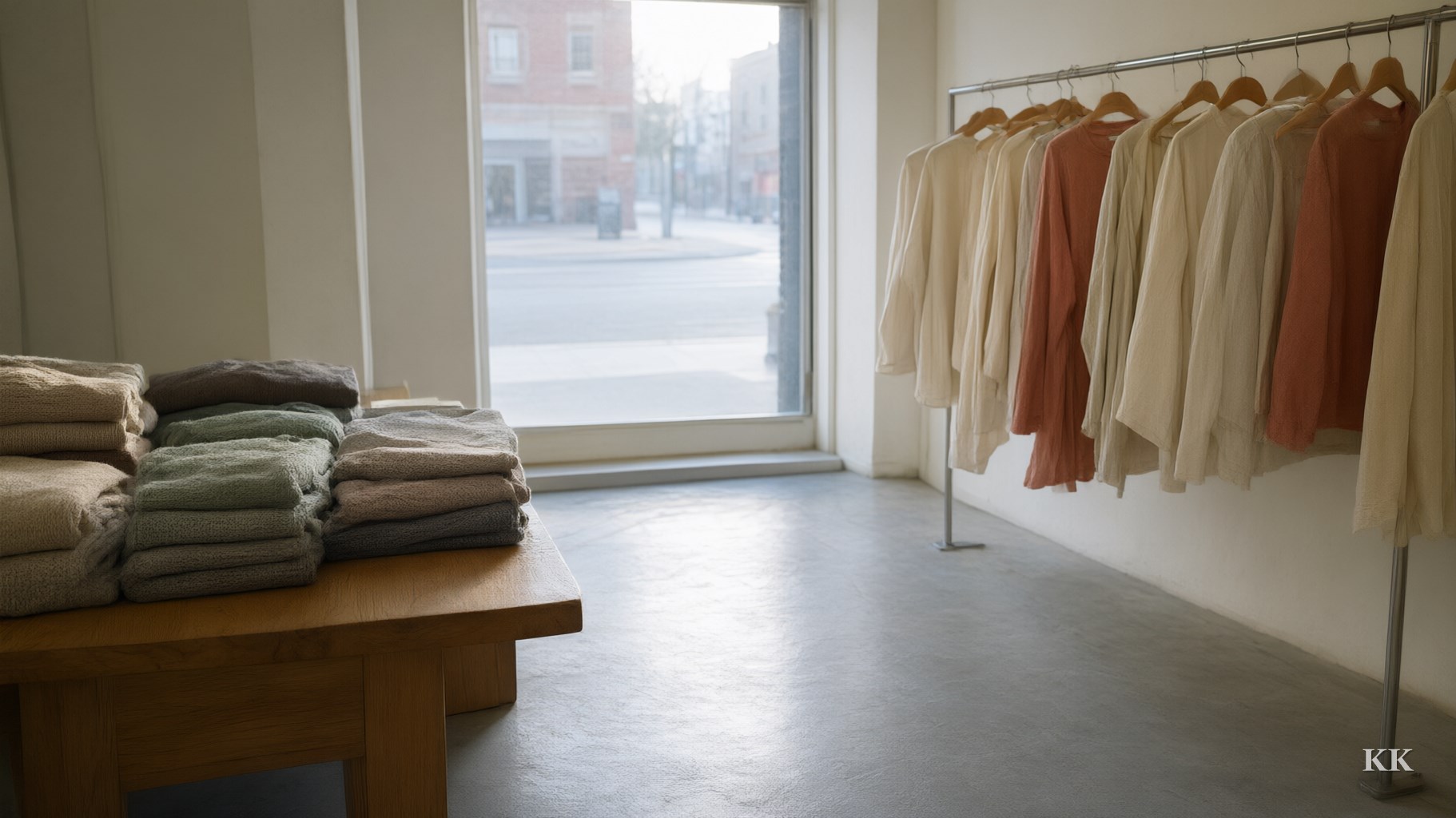
None of the mistakes new fashion brand founders make are rare, and most of them can be caught before the bulk order if you look for them. The trouble is that each one sits with a different person: a researcher, a designer, a factory, a freight forwarder, a photographer. Nobody is looking at the whole chain, so the gap between two of them is where the money goes.
That gap is the job we do. Here is what we cover against each of the seven, so you can see where a partner changes the outcome and where it’s still your call.
Where we step in, mistake by mistake
- 01
Trend and forecast research comes before the first sketch, so the fit, the fabric and the price have a customer to answer to.
- 02
We develop the collection and the labels around your brand identity. Badria Al Shihhi said what impressed her most was “their ability to translate my personal style into a cohesive brand identity.”
- 03
Tech packs, in-house sampling, fit approvals and AQL inspections (a standard method for sampling bulk quality) are all managed by us, with photos and video from the floor as it runs. Defects beyond the agreed limits get repaired, replaced or credited under the contract.
- 04
Open costing on request: a breakdown of fabric yield, trims, cut and make, wastage, packaging, testing and logistics, so you set the price with the real numbers in front of you.
- 05
For Badria Al Shihhi we planned the photoshoot from creative direction to execution, then guided the launch through her website, store opening and fashion-show debut.
- 06
With your forecast we can pre-book fabric or loom time to shorten reorders, and stored raw materials keep the shade, weave and trims the same from one run to the next.
- 07
Your approved patterns and specs stay on file with us, so a fit correction from your return reasons can go into the next run.
Two things we don’t do for you. We can’t choose your customer, and we can’t sell the collection once it exists. A founder who has not decided who the brand is for will get a well-made product either way, and that is the one mistake a partner can only point at. The sooner you have a customer in mind, the more of the rest we can take off your plate.
If we were in your shoes, we would take the checklist above, mark the two items you are least sure of and settle those first. Which two would you pick?
Send us the two you marked.Tell us which items you are least sure of and where your collection is today. A production lead will reply with what we would settle first.
Frequently Asked Questions
What are the biggest mistakes when starting a fashion brand?
The seven we see most often are designing without a defined customer, skipping positioning, choosing a manufacturer on price alone, pricing from the factory quote, launching without an audience, ordering stock without demand data and treating launch day as the end of the work. The early ones cost the most, because they stay hidden until the money is spent.
How much money do you need to start a clothing brand?
It depends mostly on how many styles you launch and how many units of each. Budget for design and tech packs, more than one round of samples, the production run, freight and US duty, packaging, photography and marketing, and keep cash back for a reorder of whatever sells. Fewer styles in smaller runs is the usual way to start a clothing brand on a tighter budget.
How do you find the right manufacturer for a fashion brand?
Shortlist on capability before price: can they work with your fabric and construction at your quantities? Ask who will sew the bulk order and whether the sample comes from that same unit. Put measurements, tolerances and fabric weight in a tech pack, and agree in writing what happens if bulk doesn't match the approved sample.
How can new fashion brands attract their first customers?
Start before you have stock. Share the development process while you sample, build an email list, and use a waitlist or pre-orders to see what people actually want. If you send product to creators, make sure the free product or payment is disclosed in each post, as the FTC requires. Paid ads work best once you know which message already converts.
How long does it take to build a successful fashion brand?
Launching takes months and building takes years. A first production run takes around 23 weeks from design to delivery in our production timeline, and Badria Al Shihhi's brand launched eight months after we started work together. Growing a fashion brand after that depends on repeat customers, which is why the months after launch matter as much as the launch.
What is the most important thing to consider before launching a clothing brand?
Who the customer is. The product, the fabric, the price, the marketing channel and how much stock to order all depend on that answer, so it is the first decision to get right and the one most new founders rush.
About Krazy Kreators
Krazy Kreators is the end-to-end brand-building partner for US clothing founders — design, sampling, fabric sourcing and retail-grade production, and packaging, under one roof, from first sketch to shelf. krazykreators.com
Read next
10 min read
Costly Mistakes Fashion Startups Make (and How to Avoid Them)
Our earlier, wider list of ten, including cash flow and sustainability.
8 min read
The Real Cost of Choosing the Wrong Clothing Manufacturer
What mistake 3 costs, in money and in months.
11 min read
From Sketch to Store: A Real Clothing Production Timeline
Week-by-week dates for a first run and a reorder.
Comments
No comments yet
Be the first to share your thoughts!