On 27 September 2026, the word “eco-friendly” on a hangtag becomes a legal claim in 27 countries. Not a mood. A claim, with a burden of proof attached.
That is the short version of the EU green claims directive for fashion brands, and the reason a US label with a web store that ships to Berlin should read on. The law does not ban sustainability. It bans sustainability you cannot show a document for — and self-made “eco” badges are gone outright.
Most of the coverage treats this as a legal or marketing problem. It is mostly a sourcing problem. The proof the law wants — fibre origin, dye process, certificates — sits with whoever made the garment, not with whoever wrote the product page.
What the Green Claims Directive (ECGT) actually is
Two EU laws share the nickname, and the mix-up matters. The one with the September date is Directive (EU) 2024/825, the Empowering Consumers for the Green Transition Directive, adopted in February 2024 and applying from 27 September 2026 (European Commission). The separate “Green Claims Directive” proposal — the one that would have set detailed substantiation rules — was slated for withdrawal in June 2025 and has been stalled since (Latham & Watkins).
So the deadline is real, but the rulebook is the consumer-protection one. Three things change on the 27th. Generic environmental words are banned unless you hold a top-tier award such as the EU Ecolabel. A sustainability logo or badge must sit on a certification scheme verified by an independent third party, or be set by a public authority. And a claim about the whole product when only one part qualifies — “made with recycled material” when only the packaging is — is blacklisted (EUR-Lex, Annex I points 2a, 4a and 4b).
What counts as a green claim now
The test is specificity on the same medium. The directive’s own examples of banned generic wording are “environmentally friendly”, “eco-friendly”, “green”, “climate friendly”, “biodegradable” and “similar statements” (recital 9); law firms read “sustainable” as squarely inside that catch-all (Cooley). A claim stops being generic when its specification sits next to it — on the same hangtag, the same product page — in clear terms.
| Vague (banned) | Compliant (specific, evidenced) | Why |
|---|---|---|
| “Eco-friendly fabric” | “Made with 100% GOTS-certified organic cotton” — transaction certificate on file | Generic word, no specification. Banned unless you hold an EU Ecolabel-type award. |
| “Sustainable collection” | “Shell fabric is 80% GRS-certified recycled polyester” — scope certificate on file | “Sustainable” on its own is generic. The fibre share and the scheme make it specific. |
| “Made with recycled material” (only the polybag is) | “Shipped in a 100% recycled-content polybag” | Claiming the whole product when one part qualifies is blacklisted outright. |
| Your own green leaf badge | The scheme’s licensed mark, used under its rules | A sustainability label must sit on a third-party-verified scheme or be set by a public authority. |
| “Climate neutral” via purchased offsets | “Factory runs on 100% renewable electricity” — supplier records on file | Neutral, reduced or positive-impact claims based on offsetting are blacklisted. |
Note what the compliant column does not require: a certificate for every sentence. A specific claim needs evidence you can produce on demand. A logo needs a third-party scheme. A vague word needs an Ecolabel, which for a small brand means it needs to go.
Free download
The Sustainability Claims Audit Checklist
Not sure your product copy would pass? A one-page checklist to run your listings and hangtags against: Do you say “eco-friendly”? Can you name the certification body? Is the certificate on file, and does it cover this batch? Twelve questions, a pass/fix column, and the documents to ask your manufacturer for.
Who it applies to (and why “I’m not in the EU” doesn’t help)
The directive amends the Unfair Commercial Practices Directive, which covers any trader selling to consumers in the EU, wherever the company sits (Cooley). A US brand on an EU marketplace, an EU-facing web store, or a Copenhagen stockist’s shelf is in.
There is no phase-in for stock already on shelves. The law regulates the claim at the moment of sale, so a hangtag printed in March is judged in October. Nothing is grandfathered.
The real problem: the paper trail sits with your manufacturer
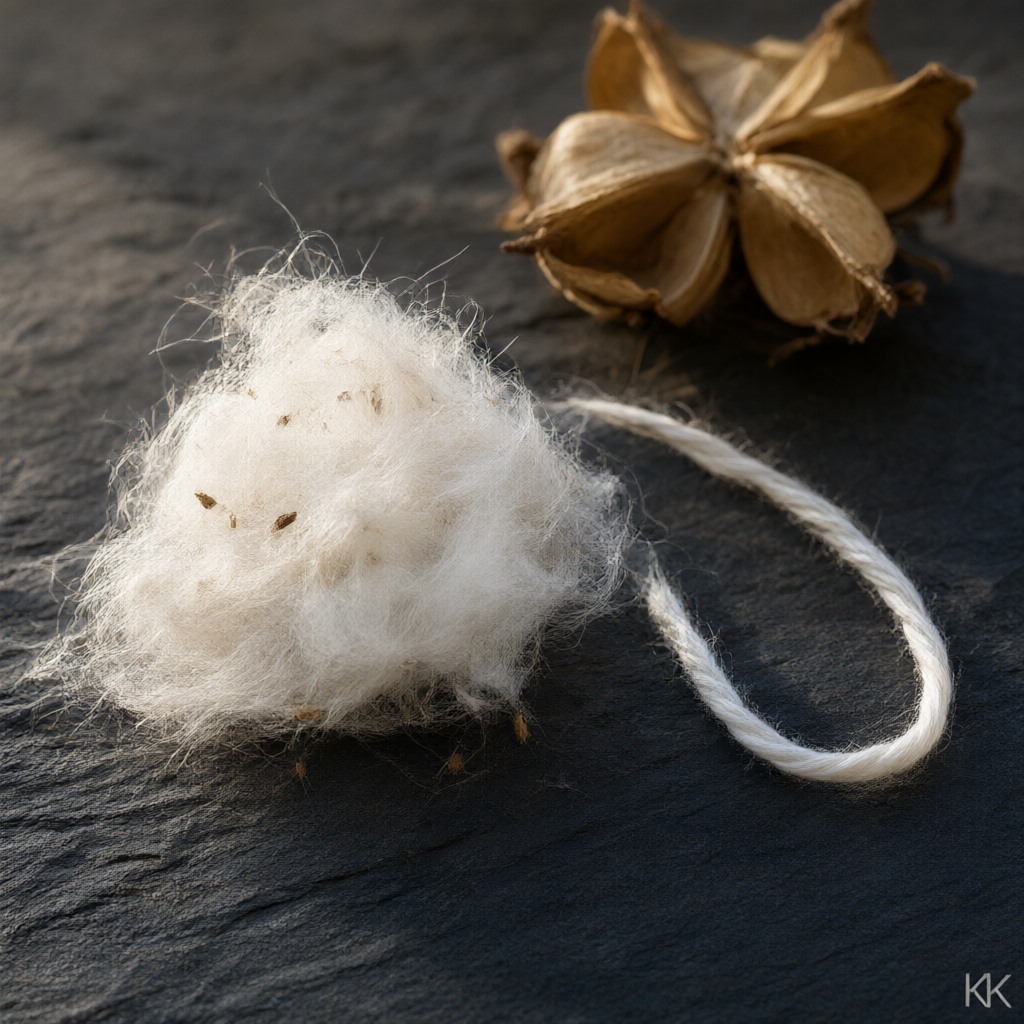
A founder can want to comply and still fail. Ask most small brands to prove “organic cotton” and you get a supplier invoice that says “organic cotton”. That is a claim, not evidence.
Evidence is a chain. The mill holds a scope certificate (proof it is licensed under a scheme such as GOTS). Each shipment carries a transaction certificate (a scheme document tying that batch to that licence). The dye house holds its own process records. Your tech pack (the specification file the factory builds from) states the fibre content and finish. Every link lives in a different building, and a brand running five uncoordinated vendors owns none of them.
“A supplier invoice that says ‘organic’ is a claim. A transaction certificate is evidence. The law only counts the second.”
How Krazy Kreators builds the evidence trail for you
This is where an end-to-end partner earns the description. Krazy Kreators sources only from certified mills and vendors, prioritising GRS-certified recycled polyester and organic cotton, and handles the documentation and audit work around them (our sustainability commitments). Raw materials are bought and held per brand under one roof (raw materials, managed responsibly), so a batch can be tied to a certificate, a certificate to a tech pack, and a tech pack to the garment on the shelf.
One project owner holds the whole file. That is the structural difference: a clean evidence trail across one partner is a filing job; across five vendors it is an investigation. It is the same discipline our earlier piece on sustainable clothing manufacturing argued for from the factory side.
Selling into the EU now?
Tell us the claims on your product pages and the fabrics behind them, and a Krazy Kreators production lead will tell you which documents we can hand you with your next order — and which claims to rewrite before it ships.
Five moves before your next EU order ships
- 1
Pull every environmental word off your product pages, hangtags and ads into one list.
- 2
Sort each one: specific and evidenced, specific but unevidenced, or generic.
- 3
For anything you keep, name the scheme and get the certificate into a folder you control.
- 4
Rewrite or delete the rest before the next EU order ships — stock on shelves counts too.
- 5
Ask your manufacturer, in writing, which documents come with the next batch.
The downloadable audit checklist above is the long version of this list, with a column for each document.
What happens if you don’t comply
For cross-border cases, member states must be able to fine at least 4% of a trader’s annual turnover in the countries concerned, or €2 million where turnover is unknown (EUR-Lex, Directive 2019/2161). Day-to-day enforcement sits with 27 national authorities and consumer groups can bring collective actions, so the practical risk is uneven — and unknown until the first cases land.
The concession: a brand that never sells into the EU and never plans to can leave its copy alone. Everyone else should treat unsupported wording as a defect to fix now, not a risk to price later.

After 27 September, “sustainable” is something you prove, not something you choose. The document that proves it was created, or not created, on the day the fabric was bought. In your shoes we would open the last purchase order before we opened the product page — which of your claims could you back by Friday?
This article is general information, not legal advice. Enforcement practice will settle after 27 September 2026 and differs by member state; confirm claim-specific questions with counsel in the markets you sell into. Last verified against the directive text on 22 September 2026.
FAQs
What is the EU Green Claims Directive (ECGT Directive)?
The law applying from 27 September 2026 is Directive (EU) 2024/825, the Empowering Consumers for the Green Transition (ECGT) Directive. It amends EU consumer-protection law to ban generic environmental claims that cannot be backed by recognised excellent environmental performance, sustainability labels that are not based on a third-party certification scheme or set by a public authority, and claims about a whole product that only apply to one part of it. The separate “Green Claims Directive” proposal, which would have set detailed substantiation rules, was slated for withdrawal in June 2025 and has stalled since.
When does the Green Claims Directive take effect?
Directive (EU) 2024/825 entered into force in March 2024. Member states had to transpose it into national law by 27 March 2026, and the rules apply to traders from 27 September 2026. There is no transition period for products already on sale.
Can I still use the word “sustainable” on my clothing brand?
On its own, no. “Sustainable”, “eco-friendly” and “green” are generic environmental claims, banned unless the trader holds a recognised top-tier award such as the EU Ecolabel. The word becomes usable when its specification sits next to it on the same medium — for example “made with 100% GOTS-certified organic cotton” with the certificate on file. The rule targets vagueness, not the topic.
Does this law apply if my brand isn’t based in the EU?
Yes. The directive amends the Unfair Commercial Practices Directive, which applies to any trader selling to consumers in the EU regardless of where the business is registered. A US brand selling through an EU marketplace, an EU-facing web store or a European stockist is in scope.
What evidence do I need to back up a sustainability claim?
Evidence that matches the exact scope of the claim and can be produced on request: the mill’s scope certificate under the scheme you name, a transaction certificate tying your fabric batch to that certificate, the dye house’s process records, and a tech pack that states fibre content and finish. A supplier invoice that says “organic cotton” is a claim, not evidence. Most of these documents are created by the manufacturer, which is why the paper trail is a sourcing question before it is a marketing one.
About Krazy Kreators
Krazy Kreators is the end-to-end brand-building partner for US clothing founders — design, sampling, fabric sourcing and retail-grade production, and packaging, under one roof, from first sketch to shelf. krazykreators.com
Read next
8 min read
Sustainability Simplified: Organic Cotton, GOTS, and Recycled Polyester
What the certifications named in this post actually certify, fibre by fibre.
4 min read
CPSC eFiling and California SB 707: The 2026 Apparel Compliance Rules
The US side of the same year: two rules that also run on records, not intentions.
12 min read
What Is a Tech Pack? The File Your Factory Builds From
Where fibre content and finish have to be written down before anyone can prove them.
Comments
No comments yet
Be the first to share your thoughts!